How Many Flowers Do You Need? A Stem-Count Guide for Every Arrangement
A practical stem-count guide for wedding flowers, with real numbers for bouquets, centerpieces, and ceremony pieces, plus the buffer every DIY order needs.
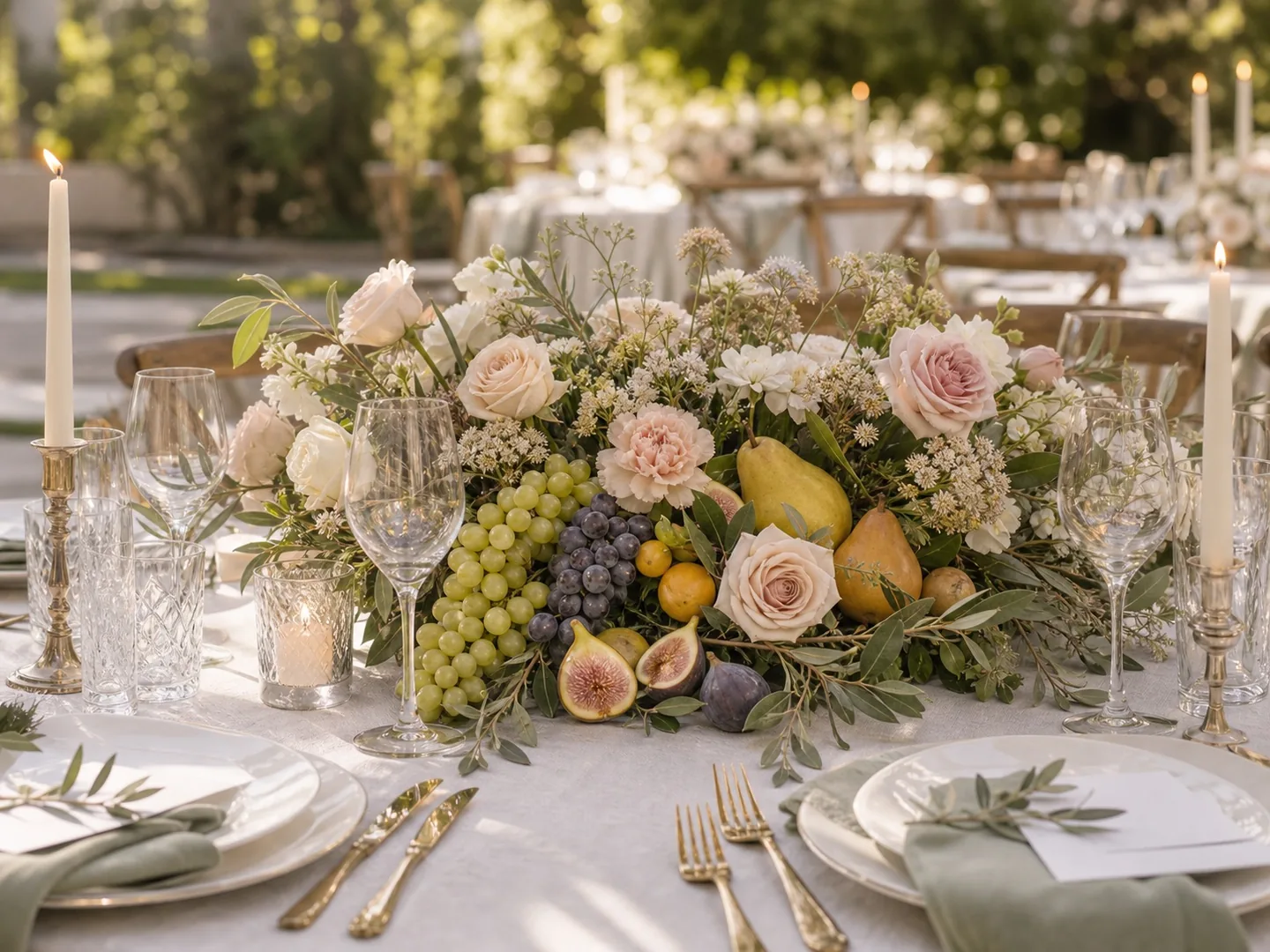
If you're ordering your own wedding flowers, the scariest question is the simplest one: how many stems do I actually buy? Order too few and you're driving to three stores the morning of. Order too many and you've spent an extra few hundred dollars on blooms that wilt in buckets.
Here's the short answer. A bridal bouquet runs 25 to 40 stems, a full centerpiece 15 to 30, and you should add a 10 to 15 percent buffer to whatever you total up. Below, we break down the real numbers by arrangement so you can build an order that's right the first time.
Stem counts by arrangement type
Start with a bird's-eye view before you tally anything. Every flower piece at a wedding falls into a handful of types, and each has a rough stem range. These are working numbers for medium-density arrangements; airier, greenery-heavy designs use fewer, while lush, packed styles use more.
Here's the master reference:
| Arrangement | Rough stem count |
|---|---|
| Bridal bouquet | 25 to 40 |
| Bridesmaid bouquet | 12 to 20 |
| Boutonniere | 1 to 3 |
| Corsage | 3 to 5 |
| Low centerpiece | 15 to 25 |
| Tall / lush centerpiece | 25 to 40 |
| Bud vase (each) | 1 to 3 |
| Ceremony arch (partial) | 30 to 60 |
Treat these as starting points, not gospel. Flower size changes everything, three peonies fill a vase that would need eight ranunculus. When in doubt, count by visual bulk, not by stem. For inspiration on the styles these numbers produce, our bridal bouquet guide shows how density and flower choice shift the look.
Bouquets: bridal versus bridesmaid
Bouquets are where couples most often miscount, because the bridal bouquet needs noticeably more than it looks. A bridal bouquet is meant to be full and photograph large in the hand, so plan on 25 to 40 stems depending on flower size. Big blooms like peonies, dahlias, or hydrangea land at the lower end; small flowers like spray roses or ranunculus at the higher end.
Bridesmaid bouquets are deliberately smaller, both for cost and to keep the bride's the focal point. Figure 12 to 20 stems each, roughly half to two-thirds the size of the bridal one. If you've got five bridesmaids, that's a meaningful chunk of your order, so count them all before you shop.
A quick way to estimate: pick your "hero" flower, decide how many of those you want showing (say, five to seven for a bridal bouquet), then fill around them with smaller accent flowers and greenery. The hero count anchors the whole thing, and the fillers flex to hit the fullness you want.
Centerpiece math by vessel size
Centerpieces eat the most flowers overall, because you're multiplying by every table. This is where the vessel does half the work of deciding your count. A wide, low bowl needs more stems to look full across its opening; a narrow bud vase needs almost none. Match the flower count to the container, not to a single rule.
Rough guides by vessel:
- Low, wide bowl or compote: 15 to 25 stems for a full look.
- Tall pedestal or lush centerpiece: 25 to 40 stems, since you're filling height and width.
- Single bud vase: 1 to 3 stems, all charm, almost no cost.
- Bud vase cluster (3 to 5 vases per table): 5 to 15 stems total, and often the best value of all.
Bud vase clusters are the quiet budget hero here. Three or five small vases with a stem or two each read as abundant, cost a fraction of a compote, and are nearly foolproof to arrange. Now multiply your chosen style by your table count. Ten tables of low compotes at 20 stems each is 200 stems, before any buffer. See how fast it adds up? Our wedding decor ideas show how to mix vessel heights so you can lean on cheaper bud vases without the tables looking bare.
Ceremony pieces
Ceremony flowers are the wild card, because an arch can swallow stems by the hundred or stay charmingly minimal. Decide the look first, then count. A full, florist-style arch with dense floral corners might use 100-plus stems; a modern, sparse design with two focal clusters and trailing greenery might use 40.
The common ceremony pieces and their appetites:
- Arch or arbor florals. Anywhere from 30 stems for a partial, asymmetric spray to well over 100 for full coverage. Greenery does a lot of the heavy lifting cheaply.
- Aisle markers. 3 to 8 stems each, times however many rows you're marking. Every other row is plenty.
- Altar or welcome arrangements. Treat each like a large centerpiece, 25 to 40 stems.
- Petals for the aisle or flower girl. Sold by the cup or bag, not the stem; buy by volume.
A smart move: design ceremony flowers so they can migrate to the reception. An arch spray becomes the sweetheart-table backdrop; altar arrangements move to the buffet or bar. You buy the stems once and they work twice.
The DIY ordering buffer
Never order the exact number you calculated. Flowers arrive imperfect, some stems are bent, some blooms won't open, a few break in transit or in your hands as you build. A buffer isn't waste; it's insurance against a frantic morning-of shortfall you can't fix.
The buffer rules we'd follow:
- Add 10 to 15 percent to your total stem count. More for delicate flowers like poppies or fully-open peonies that bruise easily.
- Order 2 to 3 days before the wedding, so flowers have time to open and hydrate but aren't past their peak. Firm, closed buds are what you want on arrival.
- Buy extra greenery, not just flowers. Greenery fills gaps, hides mechanics, and stretches every arrangement. It's cheap insurance.
- Round up to full bunches. Wholesalers sell in bunches (often 10 or 25 stems), so your real order rounds up anyway. Let it.
DIY flowers can save real money, but the savings evaporate if you under-order and end up at the grocery store in your robe at 8am. Order once, order with a cushion. Since flowers are usually 8 to 10 percent of a wedding budget, worth checking how yours compares in our wedding budget guide.
A full-wedding stem worksheet
Here's how to turn all of this into one number. Walk through your wedding piece by piece, jot the count, and total it. Then add your buffer at the end.
| Piece | Count needed | Stems each | Subtotal |
|---|---|---|---|
| Bridal bouquet | 1 | 30 | 30 |
| Bridesmaid bouquets | your number | 15 | fill in |
| Boutonnieres / corsages | your number | 2 to 4 | fill in |
| Centerpieces | table count | 20 | fill in |
| Ceremony pieces | your number | 40 | fill in |
Add the subtotals, then multiply by 1.15 for your buffer. That's your order. As a gut check, a modest 60-guest wedding with simple bud-vase centerpieces might land around 200 to 300 stems total; a lush 120-guest wedding with full compotes and an arch can easily pass 600. Know which end you're on before you click buy.
Common questions about wedding flower quantities
How many stems are in a bridal bouquet?
A bridal bouquet typically uses 25 to 40 stems, depending on flower size. Large blooms like peonies, dahlias, and hydrangea reach a full look at the lower end, around 25, while small flowers like spray roses or ranunculus need closer to 40. Bridesmaid bouquets are smaller, usually 12 to 20 stems each, so they stay secondary to the bride's.
How many flowers do I need for a centerpiece?
It depends on the vessel. A low, wide bowl or compote needs 15 to 25 stems to look full, while a tall or lush centerpiece uses 25 to 40. Single bud vases need just 1 to 3 stems each, and a cluster of three to five bud vases per table, 5 to 15 stems total, gives an abundant look for far less money.
How much extra should I order for DIY wedding flowers?
Add a 10 to 15 percent buffer to your total stem count, and more for delicate flowers that bruise easily. Some stems arrive bent, some blooms won't open, and a few break as you arrange. Ordering extra greenery helps too, since it fills gaps cheaply. Buying by full bunches, often 10 or 25 stems, usually rounds your order up naturally.
When should DIY wedding flowers be delivered?
Have flowers delivered 2 to 3 days before the wedding. That gives tight buds time to open and hydrate without passing their peak by the ceremony. Aim for firm, mostly-closed blooms on arrival, then let them open in water in a cool room. Delicate flowers like peonies may need slightly more lead time to bloom fully.
Written by the Bride Loom editorial team. Read our editorial policy and corrections process.