Venues & Settings · August 18, 2026 · 6 min read
Backyard Wedding Guide: Permits, Rentals, and What It Really Costs
A backyard wedding isn't free. See what permits, tents, rentals, restrooms, and power really cost, plus an honest home-versus-venue price comparison.
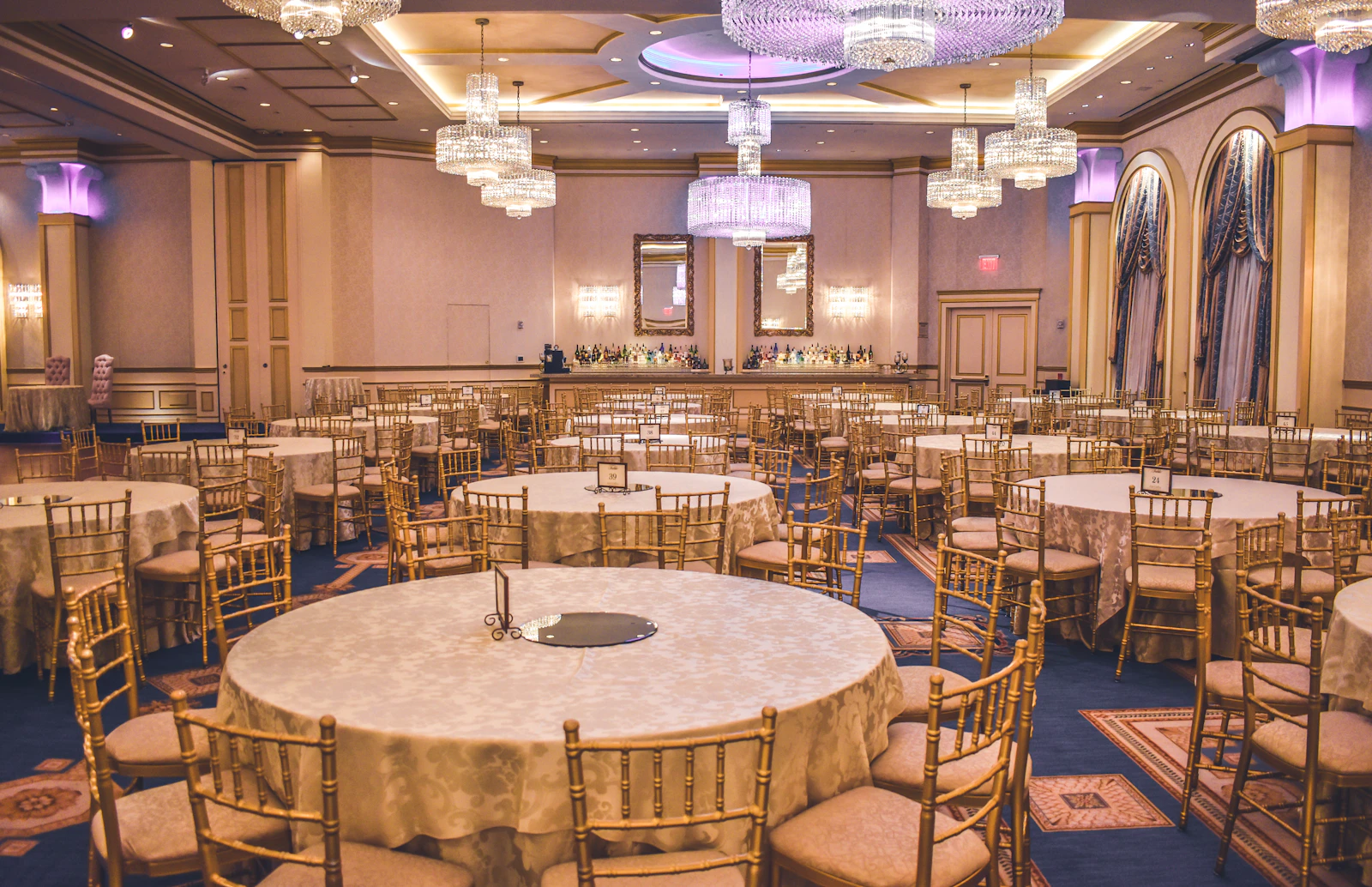
Backyard weddings aren't free. A home wedding for 100 guests usually runs $8,000 to $20,000 once you add tents, rentals, restrooms, power, and catering equipment. You skip the venue fee, then spend most of it rebuilding everything a venue already owns.
The trade is control. You set the timeline, the guest list, and the whole feel of the day without a coordinator watching the clock. But "let's just do it at home" hides a long rental list. Here's what a backyard wedding actually costs, and how to plan one that doesn't blow up your budget.
The myth of the free venue
A venue fee looks like the thing you're avoiding. It's really a bundle. When you book a barn or ballroom, that price quietly includes tables, chairs, bathrooms, parking, kitchen space, power, insurance, and a staff who know where the circuit breakers are. Your backyard has none of that.
So the "free venue" becomes a construction project. You're not saving the whole fee; you're trading one line item for fifteen smaller ones. Some couples still come out ahead, especially at small guest counts or if they already own a flat lawn and generous parking. Many break even. A few spend more than a comparable all-inclusive venue would have cost, because building a temporary event space from nothing is genuinely expensive.
The honest move is to price the whole build before you fall in love with the idea. If you want a broader look first, our wedding venue guide compares home weddings against barns, gardens, and all-inclusive spaces.
Permits, noise, and neighbors
Before you rent a single chair, check the rules. Many US towns require a temporary event permit once you cross a guest threshold (often 50 or more), put up a tent over a certain size, or bring in amplified sound. Tent permits are common, because large tents count as temporary structures and may need a fire inspection.
Noise ordinances are the ones that ruin receptions. A lot of residential areas require amplified music to stop by 10 or 11 p.m. Build your timeline around that number, not around the party you're imagining. And talk to your neighbors early. Give them the date, invite the closest ones if you can, and hand out a phone number for the night. Neighbors who feel included don't call the police. Neighbors who got surprised do.
Quick permit checklist:
- Temporary event or special-use permit from the town or county
- Tent permit for structures above the local size limit
- Noise variance if your music runs past the local cutoff
- Parking plan if guests will fill the street
- Food and alcohol rules, especially if you're serving liquor
The rental list nobody warns you about
Here's where the budget grows. Everything a venue includes, you now rent by the piece. For 100 guests, a typical rental order looks like this:
| Rental item | Typical range (100 guests) |
|---|---|
| Tent, sides, and flooring | $1,500-$5,000 |
| Tables and chairs | $800-$2,000 |
| Linens, china, glassware | $1,000-$3,000 |
| Lighting and dance floor | $700-$2,500 |
| Catering kitchen equipment | $500-$1,500 |
Prices swing with region, season, and quality. A clear-top tent costs far more than a basic pole tent. Chiavari chairs cost more than folding ones. Order early, because the best rental companies book out for peak Saturdays, and a last-minute tent can carry a premium or simply be unavailable.
One easy way to keep this in check is to lean into the setting instead of fighting it. A garden or leafy yard needs less decor than a bare hall, and our garden wedding ideas show how to let the landscape do the heavy lifting.
Restrooms, power, and parking
This is the trio couples forget, and it's the difference between a charming home wedding and a stressful one. Your house bathroom cannot handle 100 guests. Plan on restroom trailers, which run roughly $1,500 to $4,000 for a wedding-grade unit with sinks, lighting, and climate control. Portable toilets cost less but read exactly like what they are.
Power is the silent killer. A caterer's warmers, a band's PA, string lights, and coffee urns will trip a home breaker fast. A quiet generator or two usually rents for $300 to $800 for the weekend, and you want a pro to map the load so nothing dies mid-toast.
Parking needs a plan too. Count the cars, look at your street and driveway honestly, and consider a valet, a shuttle from a nearby lot, or a neighbor's field. Guests circling the block in formalwear is a rough first impression.
Weather contingencies
The tent isn't decoration. In most of the US, an outdoor date needs a rain plan you'd actually be happy with, not a tarp and hope. If your budget can only stretch to a tent as a backup or as decor, decide which one it is early, because a real all-weather tent with sides and flooring is a bigger line item.
Heat and cold both need gear. A July afternoon wants shade, fans, and water stations. An October evening wants patio heaters and maybe blankets. Bugs deserve a plan in most regions too, whether that's citronella, fans, or a mosquito treatment a few days out. None of it is expensive alone. It adds up, and it's the stuff nobody remembers to budget until the week of.
Backyard vs. venue: an honest cost comparison
So does a backyard wedding actually save money? Sometimes. Here's a realistic side-by-side for 100 guests, with food excluded since you'd pay that either way:
| Cost category | Backyard | All-inclusive venue |
|---|---|---|
| Space "fee" | $0 | $4,000-$12,000 |
| Rentals, restrooms, power | $6,000-$16,000 | Usually included |
| Weather backup | $1,500-$5,000 | Included |
The takeaway: a backyard wedding trades a predictable venue fee for a variable build cost. At 40 guests in a yard you already own, home usually wins. At 150 guests, the rental math often catches up to a mid-range venue. Run your own numbers before you commit. Our wedding budget guide has a category-by-category worksheet that makes this comparison easy.
Common questions about backyard weddings
Do I need a permit for a backyard wedding?
Often, yes. Many US towns require a temporary event or special-use permit once you pass a guest threshold, erect a large tent, or use amplified sound. Tent permits and noise variances are the most common. Call your local planning or building department a few months out. It's a quick call that prevents a shutdown on the day.
How much does a backyard wedding cost for 100 guests?
Budget roughly $8,000 to $20,000 for the setup alone, before food and drink. That covers a tent, tables, chairs, linens, lighting, restroom trailers, a generator, and a weather backup. The range is wide because a basic setup and a polished one look nothing alike. Price your full rental list before assuming home is the cheaper choice.
Is a backyard wedding cheaper than a venue?
Not automatically. You skip the venue fee, but you rebuild everything it included: bathrooms, power, tables, parking, and a rain plan. At small guest counts on a yard you already own, home usually saves money. At 120-plus guests, the rental total often matches a mid-range all-inclusive venue, sometimes with more stress attached.
What do people most often forget to plan for?
Restrooms, power, and parking, in that order. A house bathroom can't serve 100 people, home breakers trip under catering and band loads, and street parking fills fast. Add restroom trailers, a rented generator sized by a pro, and a real parking or shuttle plan. Handle those three early and the rest of a backyard wedding is genuinely fun.